Where Tin Meets Tide
By Miles ·
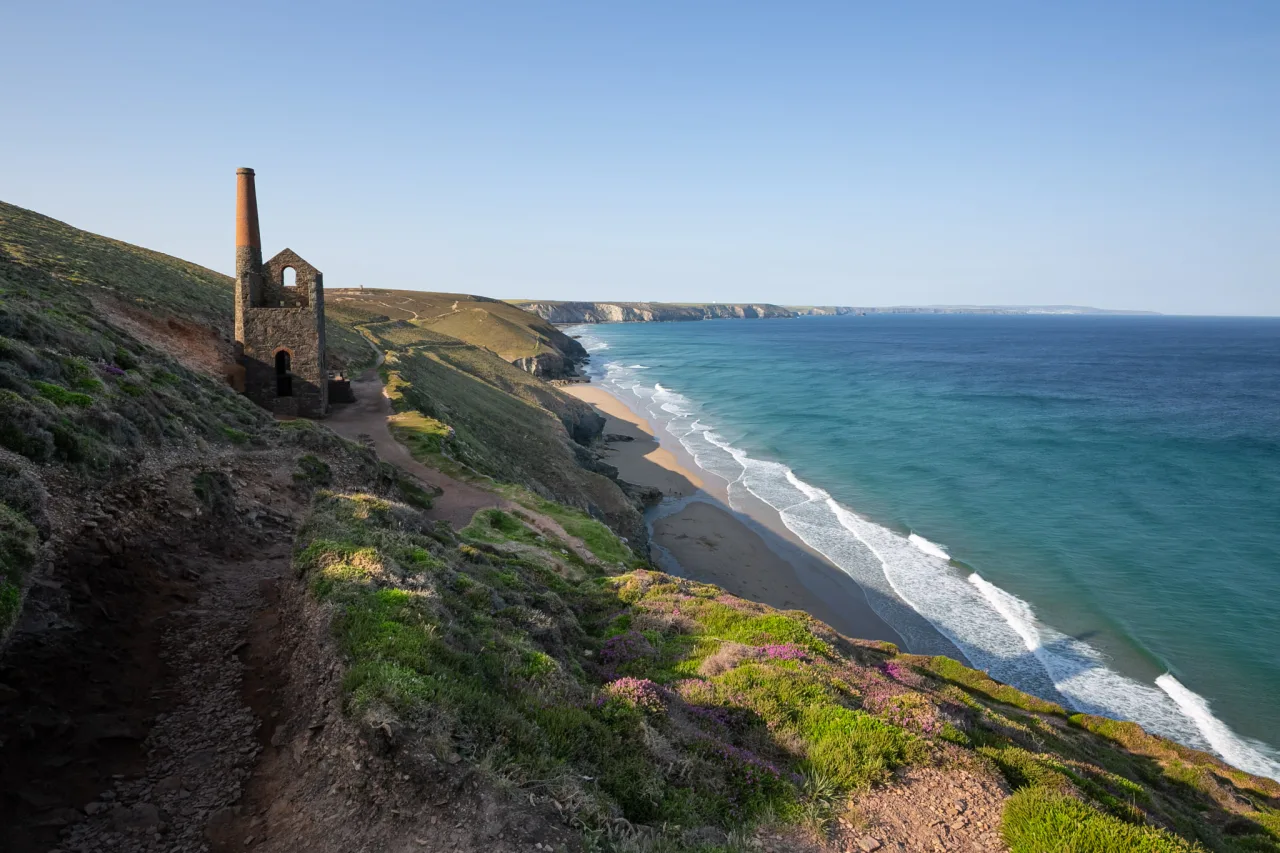
The Towanroath engine house stands above Chapel Porth, where turquoise waves break along the beach beneath the sunlit cliffs of Cornwall.
Perched on the rugged cliffs above Chapel Porth, the Towanroath engine house is one of Cornwall's most recognisable reminders of its mining past.
Part of the historic Wheal Coates tin mine near St Agnes, the engine house was built in 1872 to accommodate a powerful steam-driven pumping engine. Its purpose was to keep the deep mine workings free of water, allowing miners to extract tin from deposits that extended far beneath the seabed.
Today, the machinery has long since disappeared, but the distinctive stone building and tall chimney remain, standing above the Atlantic in one of the most dramatic locations imaginable.
Photographed in the early morning of May 2023, I was drawn to the beautiful light falling across the cliffs and the remarkable colours of the sea. The water shifted from deep blue to turquoise as gentle waves rolled towards the sandy beach below.
The narrow coastal path winds past the engine house, following the contours of the hillside towards the distant headlands. Patches of purple coastal flowers and fresh green vegetation add colour to the foreground, contrasting with the weathered stonework and exposed cliffs.
What I particularly enjoy about Wheal Coates is the relationship between its industrial heritage and the surrounding landscape. It's difficult to imagine the noise, smoke and activity that once filled these cliffs, or the miners working deep underground beneath the sea.
Now, with only the sound of the waves and the coastal breeze, the old engine house has become part of the scenery itself.
For me, this photograph captures that meeting of Cornwall's natural beauty and its industrial past, where the remains of a remarkable mining history stand against the timeless backdrop of the Atlantic Ocean.