Watchet Hill Cottage, Belstone
By Miles ·
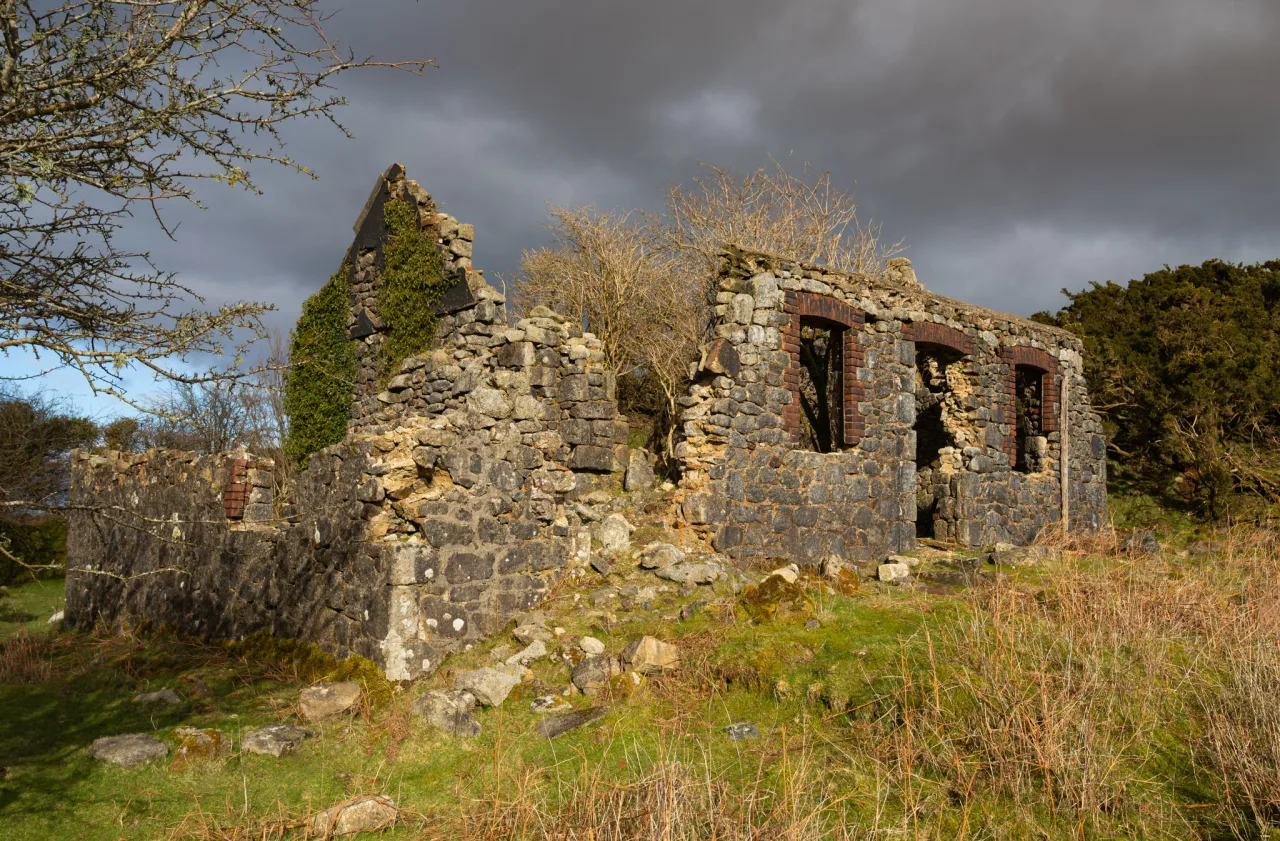
The roofless ruins of Watchet Hill Cottage near Belstone catch a brief spell of sunlight beneath dark skies, recalling a former life on Dartmoor.
Standing in quiet isolation on the hillside above Belstone, the roofless ruins of Watchet Hill Cottage offer a fascinating glimpse into Dartmoor's more recent past.
Once a remote moorland home, the cottage is now little more than a collection of weathered stone walls, empty window openings and scattered rubble. Ivy climbs the remains of the old gable, while trees and vegetation have gradually reclaimed what was once a place of everyday life.
The cottage also has an intriguing literary connection. The Devon author Eden Phillpotts stayed here while gathering inspiration for his novel The Secret Woman, published in 1905. The building subsequently became one of the principal settings in the story.
Remarkably, Watchet Hill Cottage remained occupied until the mid-1960s. Although it now stands abandoned, its surviving walls and brick-framed windows provide a reminder that this lonely spot was once someone's home.
Photographed in February 2021, I was drawn to the contrast between the ruined building and the heavy storm clouds gathering overhead. A brief spell of sunlight illuminated the weathered stonework, bringing out its textures and warm colours against the darkening sky.
There is something quietly poignant about abandoned places like this. Long after the people who lived here have gone, the remains of their homes become part of the landscape, slowly surrendering to the weather and passing seasons.
For me, Watchet Hill Cottage is more than another picturesque Dartmoor ruin. It is a small piece of local history, a reminder of lives once lived on the edge of the moor and of the stories that such places leave behind.